Claude Code Best Practices for Large Codebases — Scope Before You Ship
On a big repo, Claude Code only helps if you lock rules in CLAUDE.md, scope every ticket, plan multi-file edits, and review the diff like a PR.
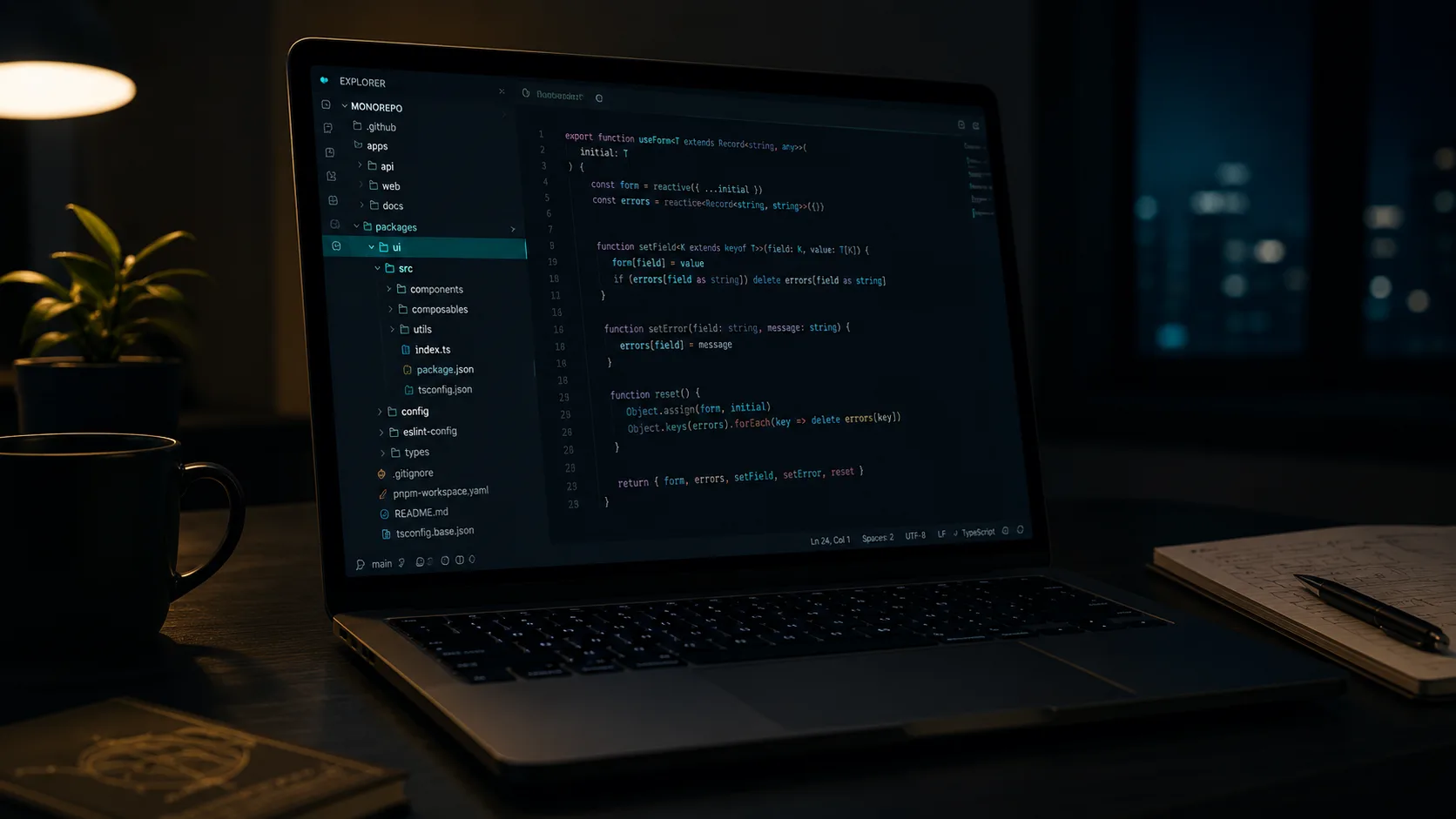
Quick Answer
Claude Code best practices for large codebases are boring on purpose: short CLAUDE.md rules, one ticket per session, named folders and verify commands, plan before multi-file edits, then review the diff like a PR. If you say “just fix auth across the monorepo,” you’ll burn context and get a patch you don’t trust.
Quick Facts
Topic: Claude Code workflows for large / multi-package repos
Category: AI developer tooling
Table of Contents
- What Is Claude Code Best Practices for Large Codebases?
- Why It Matters
- How It Works
- Step-by-Step Guide
- Real Example
- Pros & Cons
- Best Practices
- Common Mistakes
- FAQs
- Key Takeaways
What Is Claude Code Best Practices for Large Codebases?
Claude Code is an agentic coding CLI: it searches the tree, runs shell commands, edits files, and loops on your feedback. Fine on a small app. Different sport in a monorepo with shared packages, generated code, and services that share types.
“Best practices” here aren’t prompt poetry. They’re constraints — what the agent is allowed to touch, how it proves a change, and when you scrap the session and start cleaner. Same idea as keeping a Nuxt/Laravel app from mutating half the world for one bug: small surface, clear done criteria.
If you want more engineering notes in the same voice, browse the blog or get in touch about a workflow audit for your team.
Why It Matters
Large repos punish vague prompts.
- Context window fills with the wrong package while the real bug sits three folders away.
- One “cleanup” pass can rewrite cookies in
apps/web, session middleware inapps/api, and contracts inpackages/*when only one layer was broken. - Review time becomes the cost center. A loud diff is slower than writing the fix yourself.
- Teams drift: without shared project rules, every engineer’s Claude Code session invents a different house style.
You’re not buying automatic architecture. You’re buying speed inside a fence.
How It Works
Conceptually, a safe large-repo session looks like this:
- Durable memory —
CLAUDE.mdholds map, commands, and bans so you don’t re-explain the repo every time. - Scoped intent — you name package path, acceptance check, and non-goals.
- Tool use inside that fence — search/read/shell, not a tour of every service.
- Edit + verify — agent runs your lint/test scripts, not a vibe check.
- Human merge gate — you own the diff; out-of-scope files get dropped.
Agent skill is local. Architecture lives in what you write down and what you refuse to approve.
Step-by-Step Guide
Step 1: Ship a short, mean CLAUDE.md
Put the standing truth in the repo:
- How to boot, lint, typecheck, and test (exact commands, package filters if you use them)
- Where things live (
apps/api,apps/web,packages/contracts) - Hard bans: no drive-by refactors, no new deps without asking, don’t edit generated folders or lockfiles “for fun”
- Risk lanes: auth, payments, migrations need a plan message before writes
Keep it tight. A 2,000-word culture essay gets skimmed. A one-screen map + a dozen rules gets followed.
Step 2: Write the prompt like a ticket, not a wish
Weak: “Auth is broken after idle. Fix it.”
Stronger: “Only apps/api/src/session. Idle refresh returns 401 when expires_at is null. Add a regression test. Run pnpm --filter api test session. Do not touch packages/contracts or web cookie helpers.”
Always include path, done definition, non-goals, and the command that proves green.
Step 3: Plan first when the change crosses packages
For one-file bugs, skip the ceremony.
For renames, shared types, or anything that fans out:
- Ask for a short plan + file list
- Cut anything that isn’t required
- Implement in slices: contracts → callers → tests
Half-migrated types in a monorepo hurt more than a slow first pass.
Step 4: Bind verification to CI scripts
Put the prove step in the prompt:
pnpm --filter packages/ui typecheck
pnpm --filter apps/web test -- src/auth/session.spec.ts
If CI uses package filters, Claude should too. “I read the code and it looks fine” is not a gate.
Step 5: Review the diff like a hostile PR
Before you accept:
- Expected files only?
- Shared packages still honest about boundaries?
- Did error handling vanish, types loosen (
any), or lint get silenced? - Formatting/rename noise you didn’t ask for?
If the session wandered, kill it. Fresh thread with a tighter prompt beats arguing with polluted context.
Real-World Example
Setup: apps/web, apps/api, packages/contracts. Users idle out, then hit 401 on the next API call.
Unscoped prompt: “Fix the auth timeout.” Claude may “improve” JWT shape in contracts, rewrite web storage, and patch API middleware in one swing. Sometimes the 401 disappears. Often you inherit three new edge cases and a review you resent.
Scoped flow: CLAUDE.md already says API owns session cookies and web uses credentials: 'include'. Ask for a five-line plan. Land one middleware file + one test. Run pnpm --filter api test session. Leave contracts alone. Same model, smaller blast radius, diff you can read before lunch.
Pros & Cons
Advantages
- Cuts navigation time when you already know which package owns the bug
- Good at finishing mechanical work inside a fence (tests, local renames, repetitive call-site updates)
- Decent onboarding tool: “where does X live?” beats hunting Slack lore
- Team gain shows up once
CLAUDE.mdand review habits are shared
Disadvantages
- Wide prompts waste tokens and still miss the hot file
- It will sometimes “fix” by deleting awkward edge-case code
- Cross-service redesigns still need a human owning the cut line
- Vague tickets make review longer than hand-writing the change
These aren’t mirrors of each other. Speed shows up on narrow work; cost shows up when you skip the fence.
Best Practices
- Update
CLAUDE.mdthe week your package map or CI scripts change - One concern per session; new ticket → new thread
- Point at paths (
@apps/api/src/session) instead of “search the whole repo” - Prefer vertical fixes over “while you’re here” cleanups
- Match agent commands to CI package filters and lint rules
- Ban surprise dependency adds and repo-wide renames in project rules
- Commit or stash before a big agent pass so revert is cheap
- For auth, billing, and migrations: plan message first, then write access
Common Mistakes
- Monorepo-wide “figure it out” → Fix: name package + test command in the first message
- No
CLAUDE.md→ Fix: map + commands + bans on one screen - Accepting the first mega-diff → Fix: reject extra files; re-ask for the minimal change
- Skipping tests because the agent “looked around” → Fix: verification is part of the ticket
- Five tickets in one marathon chat → Fix: fresh session so old context doesn’t steer the next change
- “Upgrade the framework while fixing this” → Fix: non-goals in prompt and in project rules
Frequently Asked Questions
What is Claude Code best for in a large codebase?
Scoped work: bugs inside one package, targeted tests, local refactors, and “find the owner of this path.” Not unsupervised “modernize the platform” migrations.
How do I use Claude Code on a monorepo?
Root CLAUDE.md (plus package notes if layouts differ), ticket-shaped prompts with paths and non-goals, package-filtered verify commands, plan-before-edit when shared types move. Review like a PR every time.
Claude Code vs GitHub Copilot for large repos?
Copilot-style tools accelerate line-level typing. Claude Code handles multi-file loops with shell feedback. Both still need human scoping on a big tree; agents amplify good fences and bad ones.
Is Claude Code worth it on a legacy codebase?
Worth it if you keep tasks small and rules honest. Not worth it if you expect one session to rewrite a decade of coupling. Legacy wins come from repeated, verified slices.
Summary
Claude Code doesn’t replace judgment on a large codebase. It amplifies the process you already run: map the system, constrain the ticket, prove the change, reject noise.
Start with one service’s CLAUDE.md and one real bug through explore → plan → implement → verify. When that loop feels dull and reliable, widen the surface. Dull is the goal.
More posts live on the blog. If you want eyes on your team’s agent workflow, contact.
Key Takeaways
- Scope beats raw model power on monorepos
- Keep
CLAUDE.mdshort, current, and full of hard bans - Plan multi-file work; verify with the same commands CI runs
- Treat every agent diff like a PR — drop out-of-scope files
- One ticket per session keeps reviews fast and context clean
Comments
0 comments · new ones appear after approval
No comments yet. Be the first to share your thoughts.
Leave a comment
Your comment will be reviewed before it appears.